A small collection of poems and prose that I wrote whilst in Patagonia.
Gaucho Magic.
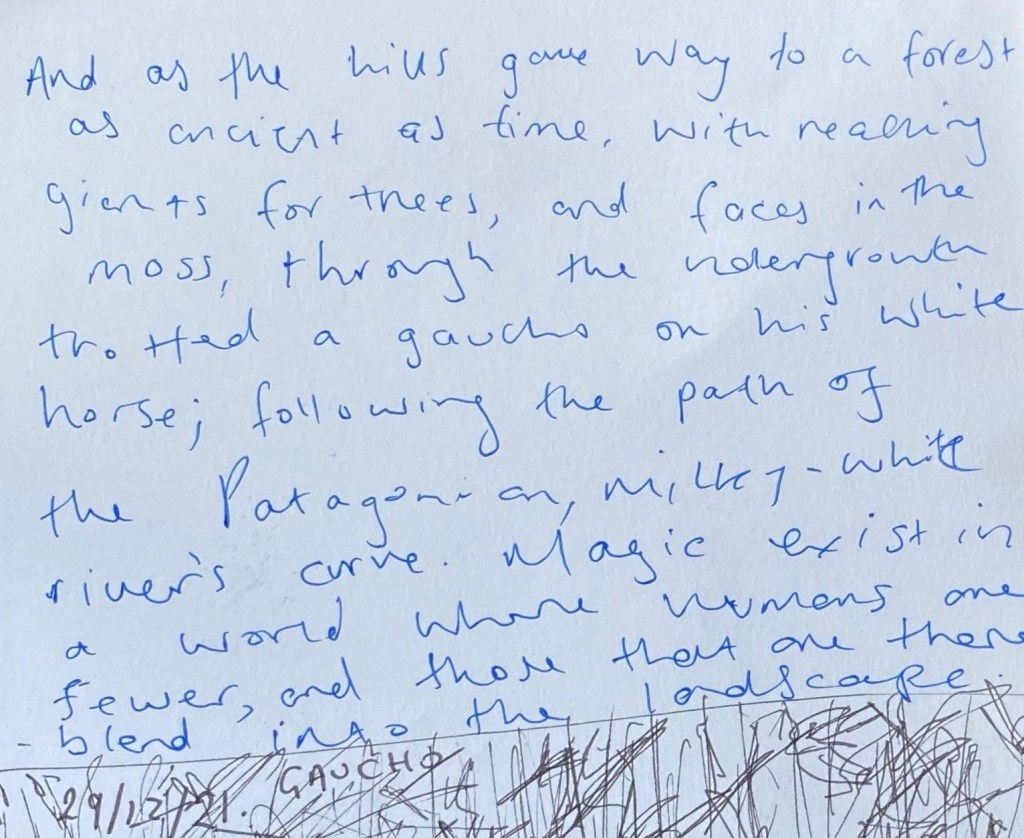
As the steep hills gave way to a forest as ancient as time, with reaching giants for trees, and faces in the moss, through the emerald undergrowth trotted a gaucho on his white horse; following the path of the Patagonian, milky-white river’s curve.
Magic exists in worlds where humans are fewer, and those that are there are a part of the landscape.
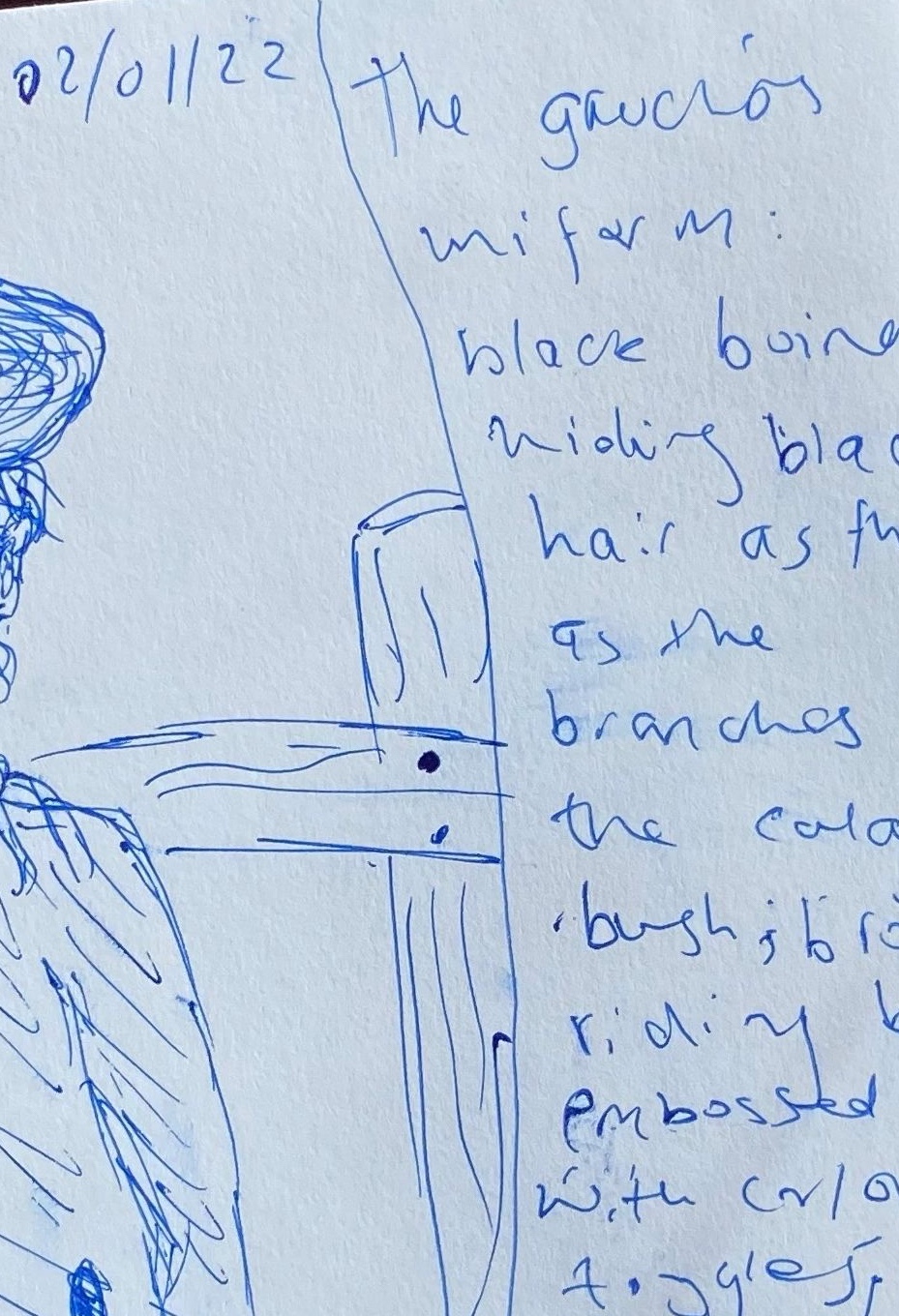
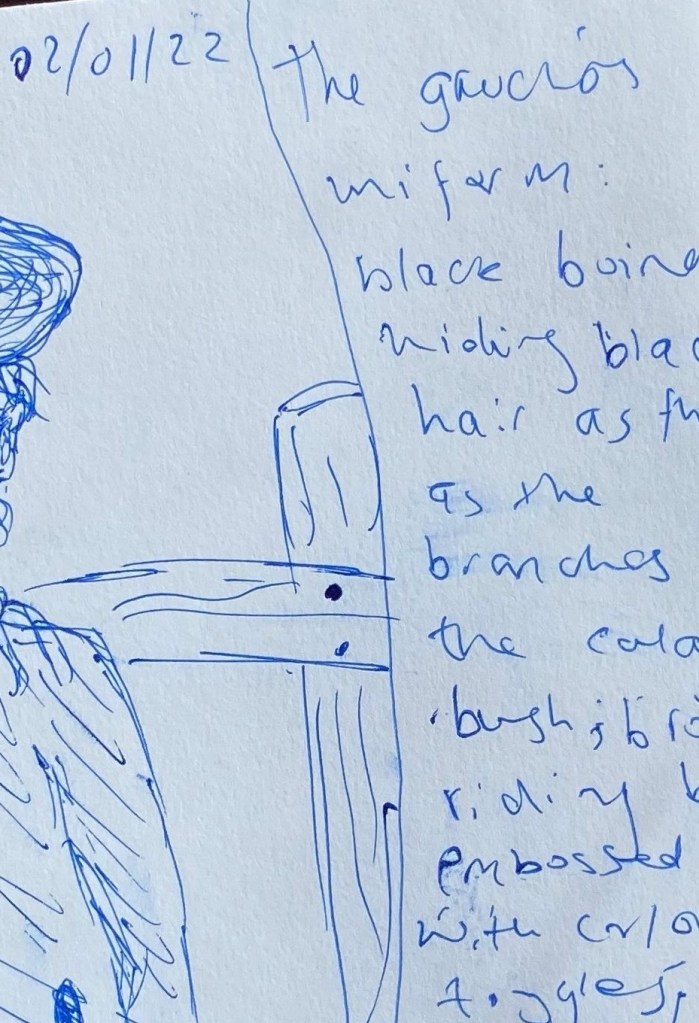
The Chileno Gaucho’s Summer Uniform:
Black boina hiding black hair as thick as the branches of the calafaté bush; brown leather riding boots embossed with colorful toggles, and intricate stitching; Pamperos in beige, or grey, buttoned at the bottom; a button-down shirt, topped with a thick wool jumper, topped with a canvas gilet; and a knife holster filled with a horn handle, and sharp blade. Ready for anything.
And his horse’s.
In its mouth is a heavy bit made of inox, with long ornate shanks, connected between the teeth by a curved cannon, port and roller for added, “control;” cowhide reins, almost two inches thick, and two meters long, for neck-reining the beast; an intricate, crisscross, likely stiff bridle – plaited by the gaucho’s own hands – rests on the face of a stocky caballo. On its back is four layers of saddlery: colourful, sweat-laden, woven-wool carpet; thick pad; metal saddle-skeleton; home-cured sheepskin. Under, and over girth. A breastplate to tackle rocky inclines. Clumsy, leather-covered wooden stirrups, positioned too long.
Feet forward, lean back, have an arm out for balance.
A lasso, shackles, and spurs tied to the saddle… just in case.
Baguales.
Roaming as a beautiful taint on the landscape the baguales are a wild reminder of Spanish colonisation. Even deep within Patagonia, so much of which is untouched, remnants of Conquistadors and their mission remain.
On the rocky mountains of Sierra Baguales reside a remarkable population. One of the largest gatherings of wild horses on the continent. Left on the Conquistadoras return to Spain, turned away to be free. All colours and shapes, they find home in each other.
And although many are lost to pumas, their numbers thrive in the intense wild.
Every few years gauchos from estancias far and wide, go to the Baguales, and gather in the feral herd. They are auctioned and bought accordingly. Then they are taken to their new homes and trained; quickly, efficiently, and with an old-school appreciation that does not involve affection.
From then on the horses have a job. And they will work.
Those not chosen will stay feral to breed, and roam, and be food for the pumas and condors.
Patagonian Pampas.
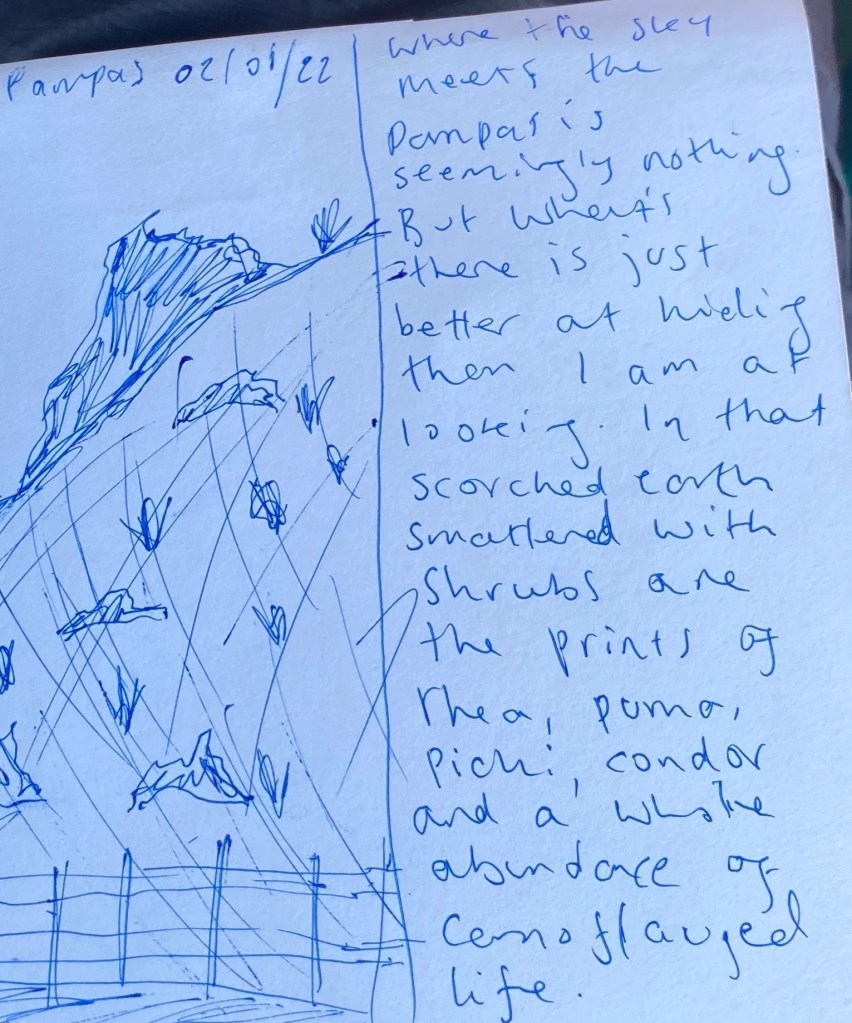
Where the sky meets the pampas is seemingly nothing,
But what’s there is just better at hiding than I am at looking.
In that scorched earth, covered with shrubs
Are the prints of pumas, and their cubs.
Rhea, pichi, guanaco, and condor,
Camouflaged against their beige home that’s both so wild, and tender.
Let us eat lamb.
Amidst the boundless expanse of the Chilean pampas, where the horizon stretches to infinity and the winds whisper tales of wild lands, there unfolds a culinary tradition as old as the landscape itself. Here, in the heart of gaucho country, the open fire becomes both hearth and theater.
The star of the show is the lamb, slow-roasting on a spike in the earth: the ritual of Gaucho-style asado.
As the sun sets over the vast grasslands, and the day’s work is done, the gauchos gather around; their dark faces weathered by the elements.
The fire crackles and spits, casting long, flickering shadows that dance upon the barren earth. A chorus of sizzling fills the air as the lamb, skewered upon an asador, begins to cook, its fat dripping.
The gauchos are masters of simplicity. They season the lamb with just salt, and make sure that the fire remains a constant medium high heat.
Usually one gaucho takes the role of asador, skillfully using his knife to check for the even cooking of the meat. Every so often it will need turning. The lamb absorbs the heat from the open flames, its juices melting onto the embers below, releasing a cloud of smoke that envelops the scene.
The gauchos, united in their uniforms, swap stories and share yerba mate (or a beer) whilst they await the feast. The lamb’s skin crisps and caramelizes, the aroma intensifying. It’s a symphony of fire and flavour, a communion between man and nature.
With a practised hand, the asador slices into the lamb, revealing a tender and smoky interior. The gauchos gather. A testament to the age-old tradition that binds them to this land.
The lamb is served with potatoes, bread, and traditionally little else.
In the glow of the fire and under the vast, star-studded sky, asado is more than a meal; it’s a celebration of the untamed spirit of the pampas, where the simple act of roasting lamb on a spike becomes a timeless connection to a land that has shaped the soul of its people for generations.
Hunters and Herders.
The gaucho’s life intertwines with three types of dog.
The hounds, stealthy puma hunters, tracking through unforgiving terrain.
Agile raggedy-looking sheepdogs, herding with wisdom and loyalty.
And the Great Pyrenees, night sentinels with unyielding spirits, trained to live with lambs since pups, they guard with blind faith.
Success rewarded with sustenance, not affection.
 Rhianna's World
Love this xx
Sent from my iPad
<
div dir=”ltr”>
<
blockquote type=”cite”>
LikeLiked by 1 person
Thanks mumma!!🫶🏼🤍
LikeLike